Ingredients
- Large eggs, cold from the fridge
- Water
- Ice, for the ice bath
Equipment. Saucepan with a tight lid, Steamer basket (optional), Slotted spoon or spider skimmer, Timer, Bowl for the ice bath
Method
- Bring about an inch of water to a rolling boil in a saucepan. A steamer basket works well here, because the eggs do not need to sit in the water.
- Lower the eggs in one at a time with a slotted spoon. Do not tip them in from the carton.
- Cover the pan, drop the heat to medium low and start the timer. Six minutes for a runny yolk, nine for jammy, twelve to thirteen for firm.
- Half fill a bowl with ice and cold water while they cook.
- Lift the eggs out the moment the timer goes and put them straight into the ice bath.
- Leave them there for at least ten minutes, longer if you want them cold for a salad.
- Tap each egg all over on the worktop and roll it under your palm to craze the shell. Peel from the blunt end under running water.
How long do you boil an egg?
These times are for large eggs going straight from the fridge into water that is already boiling.
6 minutes: white just set, yolk fully liquid.
7 minutes: white firm, yolk still runny but holding its shape.
9 minutes: yolk set at the edge and fudgy in the middle.
11 minutes: yolk set through and still slightly moist.
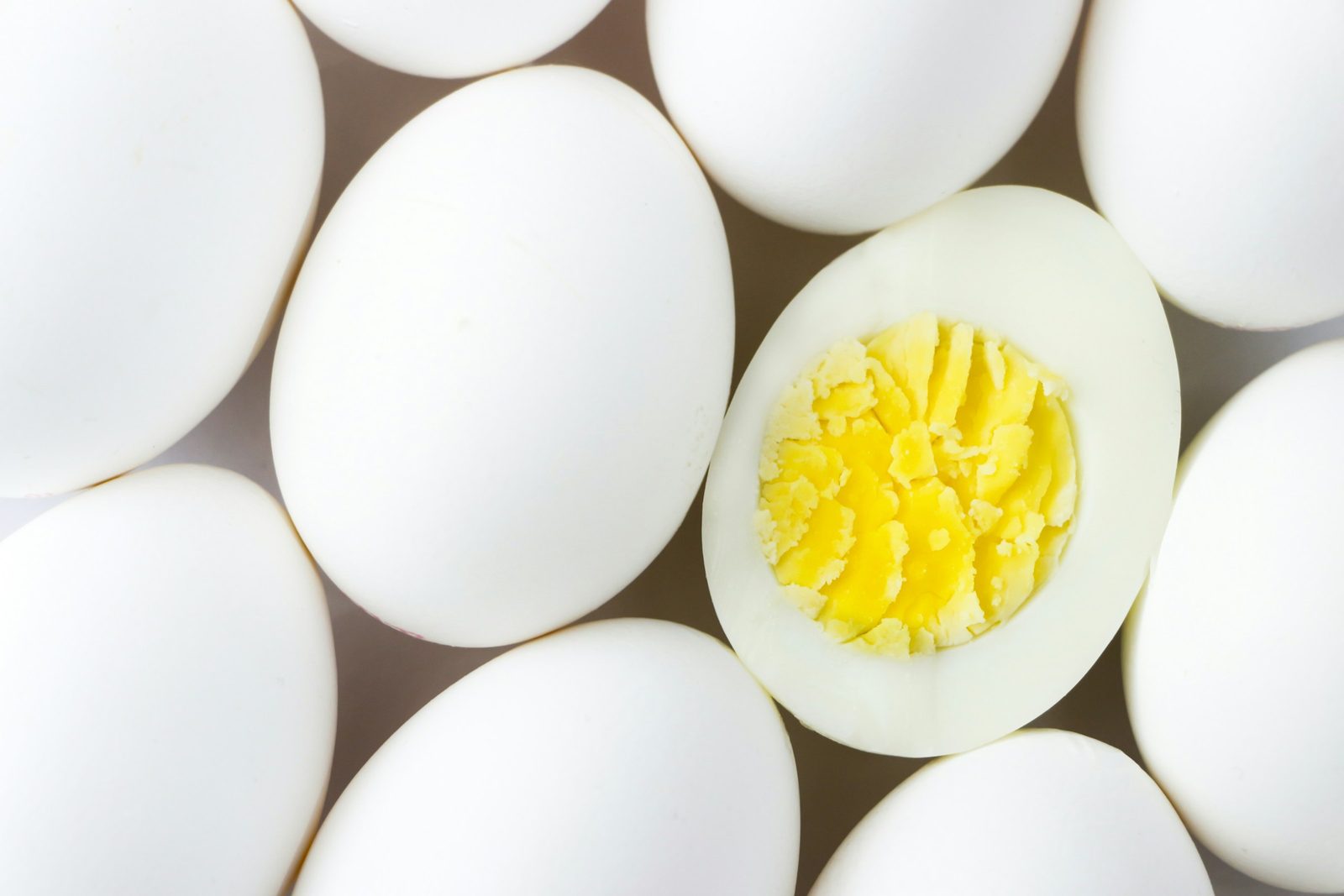
12 to 13 minutes: firm all the way through.
Past about 14 minutes the yolk only goes chalky and grey.
Medium eggs need about a minute less and extra large about a minute more. Add 30 seconds if you cook more than four at once.
Do you start eggs in cold water or boiling water?
Boiling water, or steam. The eggs peel far better, and the timer starts the moment the egg meets the heat.
A cold water start cracks fewer shells but the eggs peel badly. If you use it, bring the water to the boil, then take the pan off the heat and cover it. Leave large eggs to stand for 12 minutes, medium for 9 and extra large for 15.
Steaming sits between the two. The eggs never take a rolling boil and they still peel cleanly.
How do you stop eggs cracking?
Lower the eggs in one at a time with a slotted spoon instead of dropping them. That fixes most of it and costs nothing.
Keep them in a single layer and turn the heat down to a gentle simmer once they are in. A rolling boil does not cook them any faster.
Steaming helps too, because the eggs sit above the water instead of rolling around in it. Pricking the blunt end with a pin does almost nothing.
What is the grey ring around the yolk?
Sulphur in the white reacts with iron in the yolk and leaves a grey green film. It happens when the egg is cooked too long or too hot.
Older eggs go grey sooner, because the white turns more alkaline as the egg ages.
Stop cooking as soon as the yolk sets and cool the egg fast. The ring is harmless, but it tastes faintly of sulphur.
Do you need an ice bath?
Yes, for any egg you want firm. A hot egg keeps cooking after it leaves the pan, and the ice bath stops that.
Five minutes halts the cooking. Ten minutes or more gets the egg cold enough to peel and slice cleanly.
For a soft boiled egg you are eating straight away, 30 seconds under cold running water is enough.
Why are some eggs so hard to peel?
Very fresh eggs are the problem. The white bonds tightly to the shell membrane, and that bond weakens over a week or so as the egg ages.
A hot start helps, because it sets the outer white before it can stick. A slow warm up gives it every chance to grip.
With fresh eggs, steam them, chill them hard, then crack the shell all over and peel under running water.