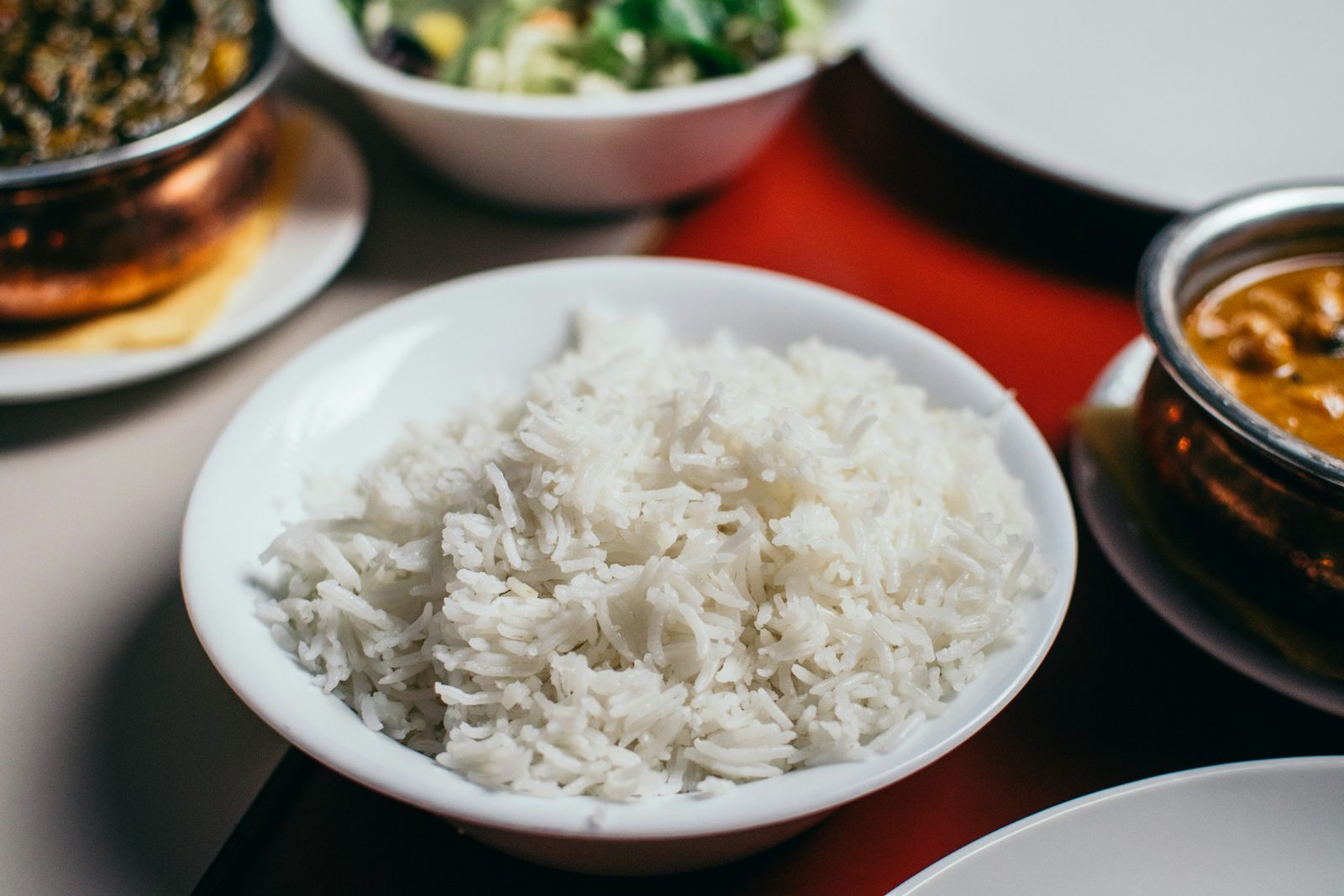
Ingredients
- 1 cup long grain white rice
- 2 cups water
- 1/2 teaspoon fine salt
- 1 teaspoon oil or butter, optional
Equipment. Saucepan with a tight fitting lid, Fine mesh sieve, Clean tea towel, Fork
Method
- Put the rice in a sieve and rinse it under cold water, stirring with your hand, until the water running off is only faintly cloudy. Two or three rinses is usually enough. Drain it well.
- Tip the rice into the saucepan with the water and salt.
- Bring it to the boil uncovered, then turn the heat to the lowest setting your hob will hold and put the lid on.
- Simmer for 15 to 18 minutes for long grain white, 12 minutes for jasmine, 40 to 45 minutes for brown. Do not lift the lid to check.
- Take the pan off the heat. Lay a clean tea towel across the top, put the lid back on over it, and leave it for 10 minutes. The towel catches the steam that would drip back onto the rice.
- Lift the lid and fluff with a fork, lifting from the bottom rather than stirring, so the grains separate.
How much water per cup of rice?
White long grain: 2 to 1, 15 to 18 minutes.
White medium grain: 1.5 to 1, 15 to 18 minutes.
White short grain: 1.25 to 1, 15 to 18 minutes.
Basmati: 1.5 to 1. Jasmine: 1.25 to 1, 12 minutes.
Brown, medium or long grain: 2.25 to 1, 40 to 45 minutes.
Parboiled white: 2.25 to 1, 20 minutes. Parboiled brown: 2.25 to 1, 25 minutes.
Arborio: 4 to 1, 20 to 30 minutes, because risotto takes its liquid in stages.
Wild rice: 3 to 1, 40 to 50 minutes.
One cup of dry rice makes about three cups cooked. That is four modest side portions.
Should you rinse rice?
Rinse white rice unless you want it sticky. It washes off the loose surface starch that glues the grains together.
Stop when the water is only faintly cloudy. Chasing completely clear water takes several more changes and strips the added B vitamins off enriched rice.
Rinsing also removes a little of the arsenic that rice takes up from the soil.
Do not rinse rice for a paella, a risotto or a rice pudding. Those dishes need the surface starch to thicken them.
Does the finger knuckle method work?
It works in a saucepan. The knuckle measures a fixed depth of water above the rice rather than a ratio.
Water in the pan does two jobs. It soaks into the grains, and it boils away. Covering the rice handles the soaking, and the extra inch on top covers what boils off.
Level the rinsed rice in the pan and add water until it just covers the grains. Then rest a fingertip on the surface of the rice and add water until it reaches the first crease. That is about an inch.
It breaks in a very wide pan, which boils off more than an inch, and with brown rice, which cooks three times as long. In a rice cooker, use the line printed inside the bowl.
How do you cook rice in a rice cooker?
Use the cup that came with the machine. It holds 180ml, and the water lines in the bowl are numbered to that cup and nothing else. Two of those cups of rice means water up to line 2.
Rinse the rice in a sieve rather than the inner pot. The coating scratches, and a scratched pot cooks unevenly.
Brown rice needs more water and the brown rice programme, which soaks the grain before it heats.
Leave the rice on keep warm for ten minutes after the cycle ends, then fluff it. The machine does not do that rest for you.
Why does rice need to rest off the heat?
When the timer goes, the grains at the bottom sat in water and the ones on top cooked in steam. Ten minutes with the lid on and the heat off lets the moisture even out.
Take the pan off the heat, lay a clean tea towel over the top, then put the lid back on over the towel. The towel catches the steam that would drip back onto the rice.
Fluff with a fork and lift rather than stir. Skip the whole step if you want sticky rice.
Why does the same rice need different amounts of water?
Most of the water in a ratio is not soaked up by the rice. The rest is an allowance for what boils away.
That depends on your pan and your hob. A wide pan with a loose lid loses far more water than a narrow pan with a heavy one.
Brown rice sits on the heat two and a half times as long, so it loses two and a half times as much water. That is why its ratio is higher.
Cook the same rice twice in your pan, note whether it came out wet or dry, and move the water by two tablespoons per cup. After that the number is yours.